
How to Choose the Right Cable Gland
Cable glands are crucial for sealing, strain relief, and EMC protection.
The choice is guided by material, IP class, temperature range and environmental requirements.
Here we go through plastic cable glands, brass cable glands, stainless steel cable glands and EMC cable glands.
Compare plastic, brass, stainless steel and EMC
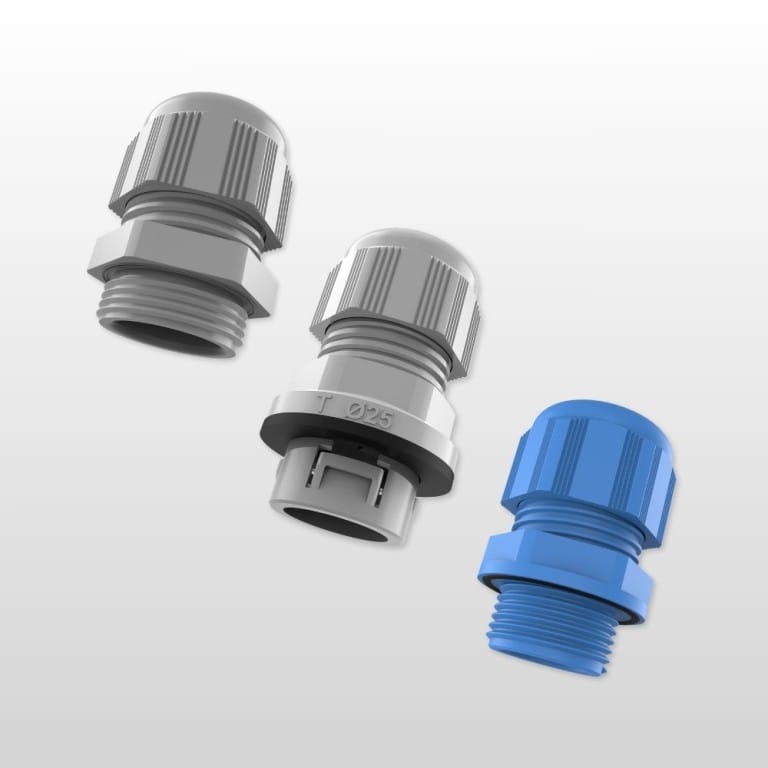
Plastic (Polyamide)
- IP class: IP66 - IP68
- Temperature range: -20 to +100 °C
- Advantages: lightweight, cost-effective, chemical-resistant
- Limitation: not for heavy cables or extreme environments
- Typical industries: telecom, building automation & panel builders
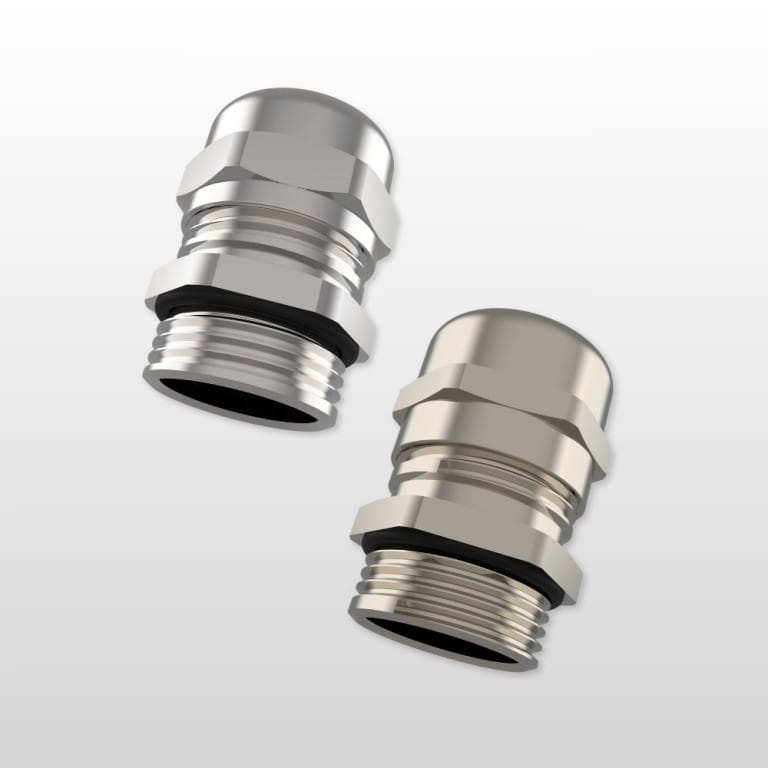
Brass (Nickel-Plated)
- IP rating: IP68
- Temperature range: -20 to +100 °C
- Advantages: industry standard, robust, high density, good strain relief
- Limitation: may corrode in very aggressive environments
- Typical industries: automation, energy & machine builders
Stainless Steel (AISI 303/316)
- IP class: IP66 – IP69
- Temperature range: -20 to +100 °C
- Advantages: hygienic, corrosion-resistant, durable
- Limitation: more expensive and heavier than plastic/brass
- Typical industries: food, pharmaceuticals, offshore & chemical industry
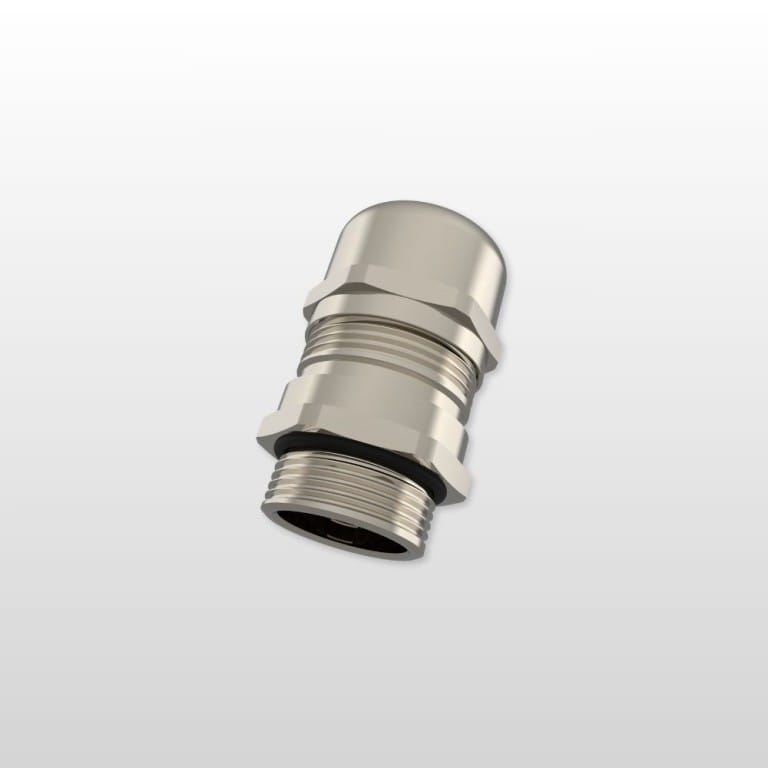
EMC Cable Glands (Brass/Stainless Steel)
- IP class: IP66 – IP69
- Advantages: hygienic, corrosion-resistant, durable
- Limitation: limited durability in demanding environments
- Typical industries: real estate, telecommunications
Comparison Table
The choice of cable gland is influenced by both environmental requirements and application. The table below compares the most common variants – plastic, brass, stainless steel and EMC – based on IP rating, temperature range, advantages, limitations and typical applications.
| Material | IP class | Temperature range | Advantages | Limitations | Typical industries |
|---|---|---|---|---|---|
| Plastic (Polyamide) | IP66–IP68 | -20 to +100 °C | Lightweight, affordable, and chemical-resistant | Not for extreme environments | Telecom, building |
| Brass (Nickel-Plated) | IP68 | -20 to +100 °C | Robust construction and high density | May corrode in aggressive environments | Automation, energy |
| Stainless steel | IP66–IP69 | -20 to +100 °C | Hygienic, corrosion-resistant, and durable | Higher cost and weight | Food, offshore |
| EMC (brass / stainless steel) | IP66–IP69 | -20 to +100 °C | EMC protection and effective strain relief | Requires proper grounding | Telecom, medical technology |
Summary
- Plastic cable glands are cost-effective and chemical-resistant, but are best suited to simpler environments.
- Brass fittings is the industry standard for automation and energy, but can corrode in aggressive environments.
- Stainless steel screw connections is the first choice in hygienic and tough environments such as food and offshore.
- EMC cable glands provides effective shielding against interference and is used where sensitive electronics need to be protected.
FAQ – Frequently asked questions about cable glands
Which cable gland is best for aggressive environments?
Stainless steel (AISI 316) with IP69K.
When are plastic cable glands sufficient?
In indoor environments without high mechanical stress.
Are EMC cable glands always necessary?
No, only where sensitive electronics are at risk of interference.