Plastic cable glands
for industrial installations
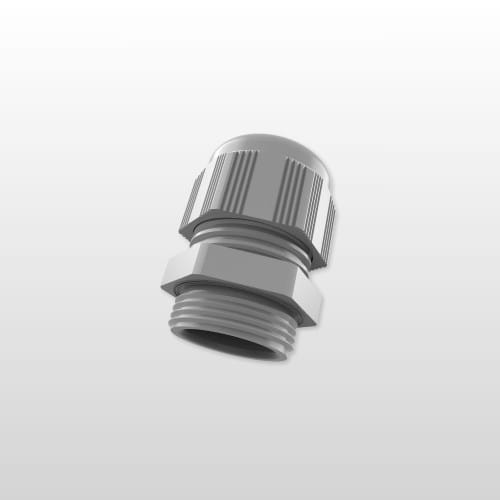
Plastic cable glands are used for secure cable entry into control cabinets and enclosures where low weight, chemical resistance and easy assembly are prioritized.
They are a common choice in industrial installations with moderate mechanical requirements and controlled environments.
Explore our range of plastic cable glands
Related product areas
FAQ - Frequently asked questions about plastic cable glands
When should you choose plastic cable glands?
Plastic cable glands are the right choice when the installation takes place in an indoor environment or protected industrial environment where corrosion, chemicals or high humidity are present.
Polyamide material provides good chemical resistance, low weight and sufficient mechanical strength for most control and automation cabinets.
Particularly suitable when:
- low weight is important
- many cable entries required
- assembly should be quick
- protection class up to IP68 is sufficient
When are plastic cable glands not the right choice?
Plastic cable glands are not the right choice in environments with high mechanical stress, risk of impact or where EMC requirements require electrical continuity between cable shield and enclosure.
Avoid plastic fittings when:
- the installation is outdoors without protection
- there is a risk of impact or vibration
- EMC requirements require shielded cable entry
- metal enclosure is used for grounding
In these cases, other solutions are usually more suitable:
What are plastic cable glands usually made of?
Most plastic cable glands are manufactured in polyamide (PA). The material has good chemical resistance and can withstand temperatures often found in industrial environments.
In some designs, the material is also UV-resistant, which allows the cable gland to be used in installations where it is exposed to sunlight or outdoor environments.
What IP class do plastic cable glands have?
Many plastic cable glands are rated up to IP68, which means they are dustproof and protected against water ingress.
However, the choice of seal and correct installation affects both the seal's lifespan and the level of protection, which makes sizing and installation important.
Are plastic cable glands UV resistant?
Some plastic cable glands are UV-resistant, but not all.
UV resistance depends on material quality and additives in the polyamide. For installations in light-exposed environments or near windows, UV-resistant designs should be selected to avoid brittleness and reduced lifespan over time.
Can plastic fittings withstand oil and chemicals?
Yes, plastic cable glands made of polyamide generally have good resistance to many oils, greases and common industrial chemicals.
However, resistance varies depending on the type of chemical, temperature and exposure time. In the case of aggressive media or continuous exposure, the material selection should be verified before installation.
How do I choose the right size cable gland?
The correct size is chosen based on cable outer diameter, not conductor area.
The cable gland should cover the cable diameter within its specified range to ensure proper sealing and strain relief. A gland that is too large or too small can lead to reduced protection class and increased cable wear.
How does cable diameter and strain relief affect the choice of plastic cable gland?
The cable gland must be sized for correct cable diameter to provide proper sealing and strain relief.
If the cable diameter is outside the range, it may lead to leakage, poor sealing or increased wear on the cable. In installations with many cables, pre-installed connectors or limited space, you can instead cable entry systems be a more suitable solution.
Accessories
For complete and safe installation, the correct accessories for cable glands are recommended.