
How to choose the right cable gland
Density & flexibility in practice
The correct cable entry determines both tightness, flexibility and serviceability.
The choice is governed by how often you need to maintain the system, what IP requirements apply and whether the cables are routed with or without connectors.
Explore the right cable entry for tightness, flexibility and serviceability
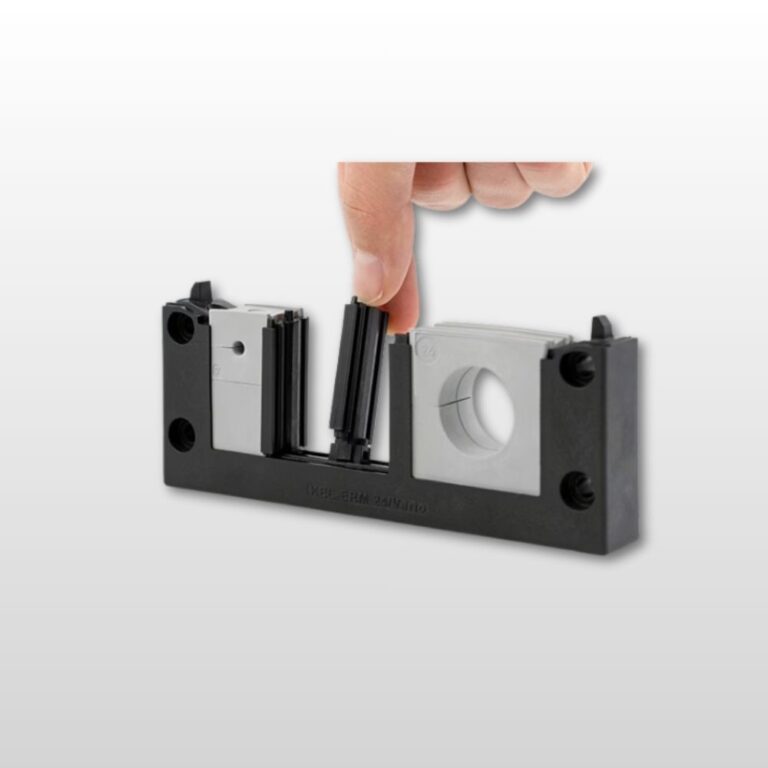
Modular systems (for cables with connectors)
- IP class: IP54 – IP68
- Advantages: cables with connectors can pass, flexible and sealed
- Limitation: higher cost, requires more planning
- Typical applications: machine builders, automation, and energy
Cable entry plates & Multiflanges
- IP class: IP54 – IP68
- Advantages: high density, easy installation of multiple cables
- Limitation: cables must be routed without connectors
- Typical applications: panel builders and control cabinets

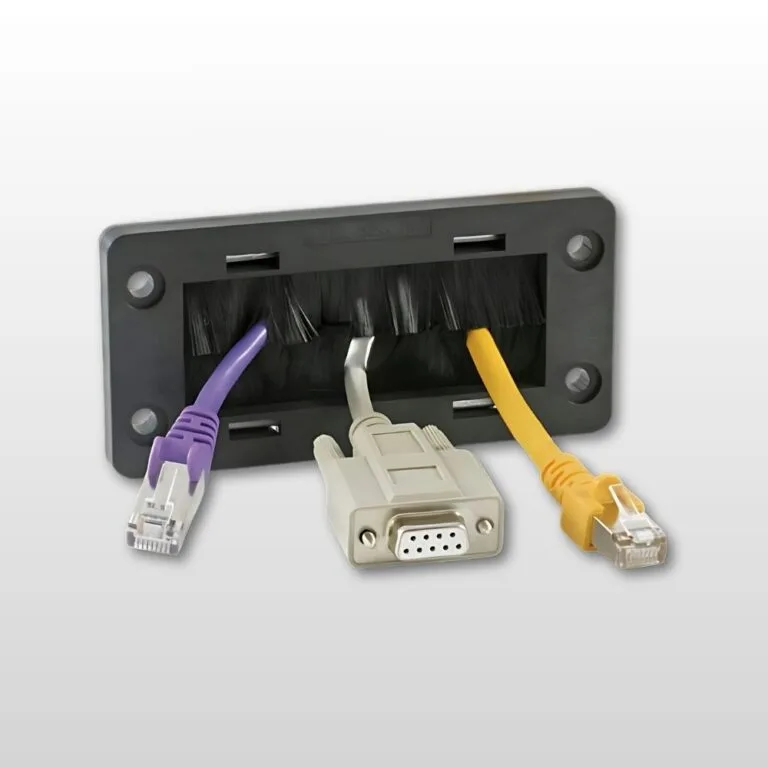
Cable entries with brush seal
- Advantages: flexible, easy to service and retrofit.
- Restriction: low density, not for outdoor use
- Typical uses: robotics and machine service panels
IP classes in practice
The IP rating determines how well a cable gland protects against dust and water. Below you will find a comparison of the most common levels and their typical uses.
| IP class | Protection level | Typical uses |
|---|---|---|
| IP54 | Basic level with good serviceability | Service panels, robotics |
| IP65 | Dampproof and protected against water jets | Panel builder, control cabinet |
| IP66–IP68 | Very high density for demanding environments | Outdoor installations, industrial environments |
Summary
- IP54 used where serviceability is more important than maximum tightness, e.g. in robotics and service panels.
- IP65 is the standard choice for control cabinet and panel builders who need reliable tightness against dust and water jets.
- IP66–68 provides the highest level of protection and is ideal for outdoor installations and demanding industrial environments.
Combined table overview
Different types of cable entry systems have their strengths and limitations. Below we compare modular entries, plates & multi-flanges and brush seals based on IP rating, advantages, limitations and typical applications.
| Type | IP class | Advantages | Limitations | Use |
|---|---|---|---|---|
| Modular | IP54–IP68 | Contacts can pass through the system | More complex installation | Mechanical engineer, automation |
| Plates & multi-flange | IP54–IP68 | That construction and easy installation | Not customized for pre-terminated cables | Panel builder |
| Brush seal | Low IP rating | Flexible and service-friendly solution | Limited protection against dust and liquids | Robotics, service panels |
Summary
- Modular penetrations is the best choice when cables with connectors are to pass through the enclosure.
- Plattor & multi-flanges provides high tightness and easy installation, but is used for cables without connectors.
- Borsttätningar Suitable where flexibility and serviceability are more important than high IP rating, e.g. in robotics and service panels.
FAQ – Frequently Asked Questions about Cable Gland
Which solution provides the highest density?
Modular systems up to IP68
When should I choose multi-flange over modular system?
When you need to seal many cables without connectors, at a lower cost.
Which solution is best for recurring service?
Brush seal, thanks to easy access.