
How to choose the right cabinet
Material & IP Class
The choice of control cabinet affects operational reliability, maintenance and service life.
Important factors are material, IP class and accessories.
Explore material choices and IP rating for enclosures
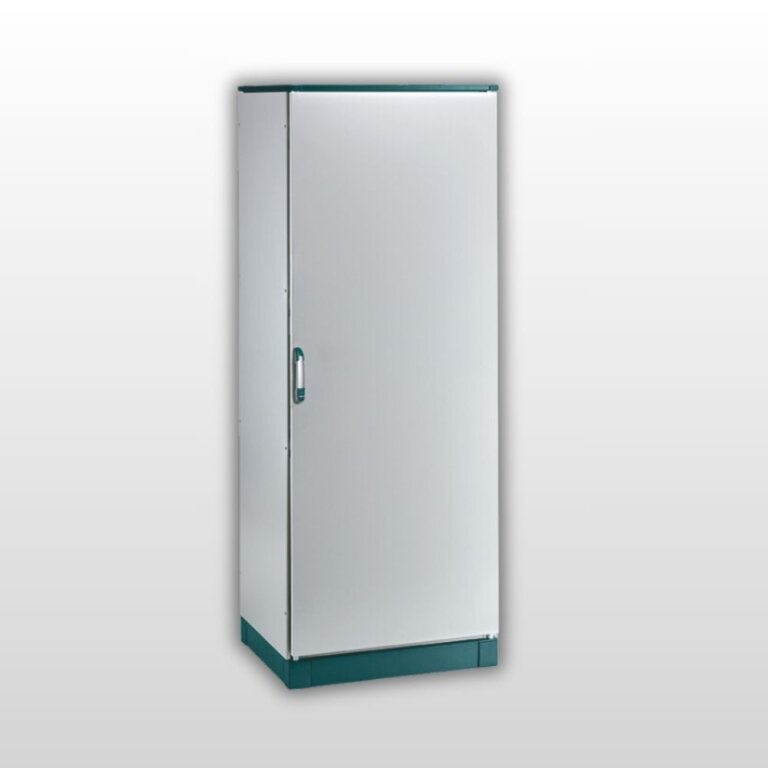
Steel Plate
Sheet metal is the standard choice in many industrial environments thanks to its strength and price, but requires protection against corrosion.
Technical characteristics
- IP class: IP55-65
- Advantages: robust & cost-effective
- Limitations: risk of corrosion
Typical applications:
- Industry & Property
Industry case
- Machine builders who prioritize price
Stainless Steel (AISI 304/316)
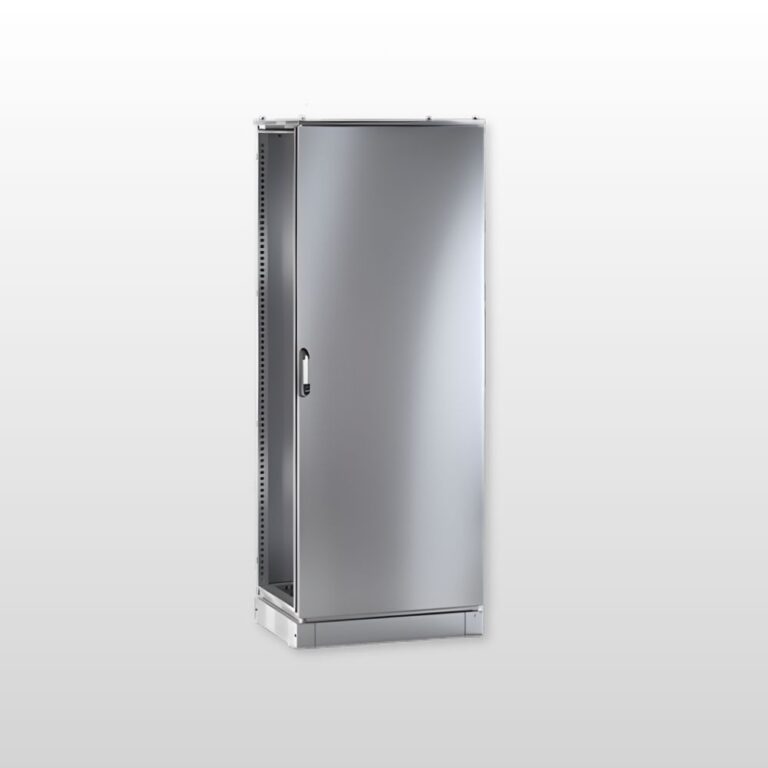
Stainless steel is the best choice for hygienic and corrosive environments, such as food and pharmaceuticals.
Technical characteristics
- IP rating: IP54-69K
- Advantages: hygienic, corrosion-free & very durable
- Limitations: higher cost
Typical applications:
- Food, Pharmaceuticals & Offshore
Industry case
- foods where cleaning is critical
Aluminium
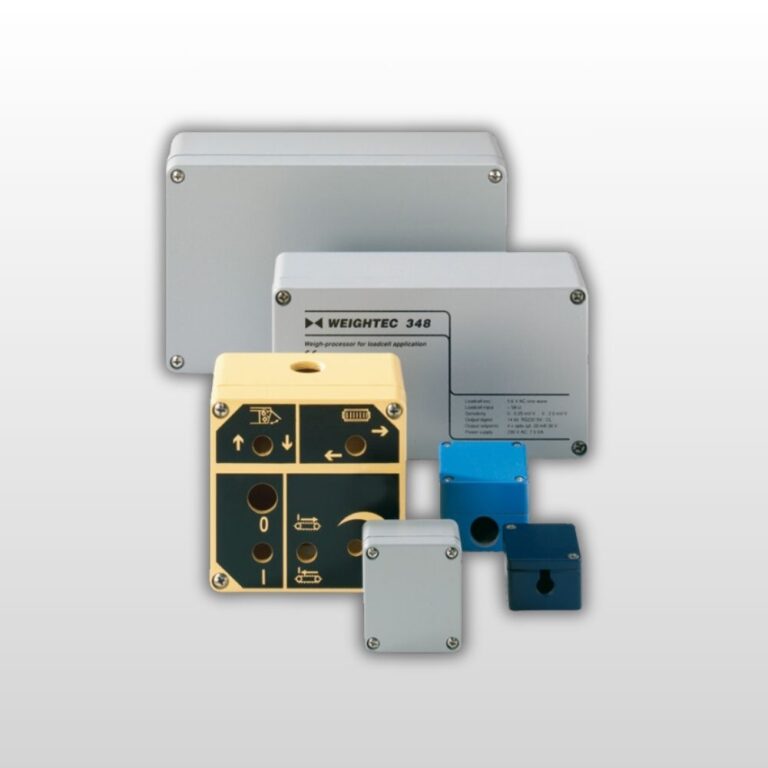
Aluminum is used where low weight and EMC shielding are important, for example offshore and in energy.
Technical characteristics
- IP class: IP65
- Advantages: light & good EMC shielding
- Limitations: lower mechanical strength
Typical applications:
- Energy & Transport
Industry case
- offshore for lower weight and EMC requirements
Plastic
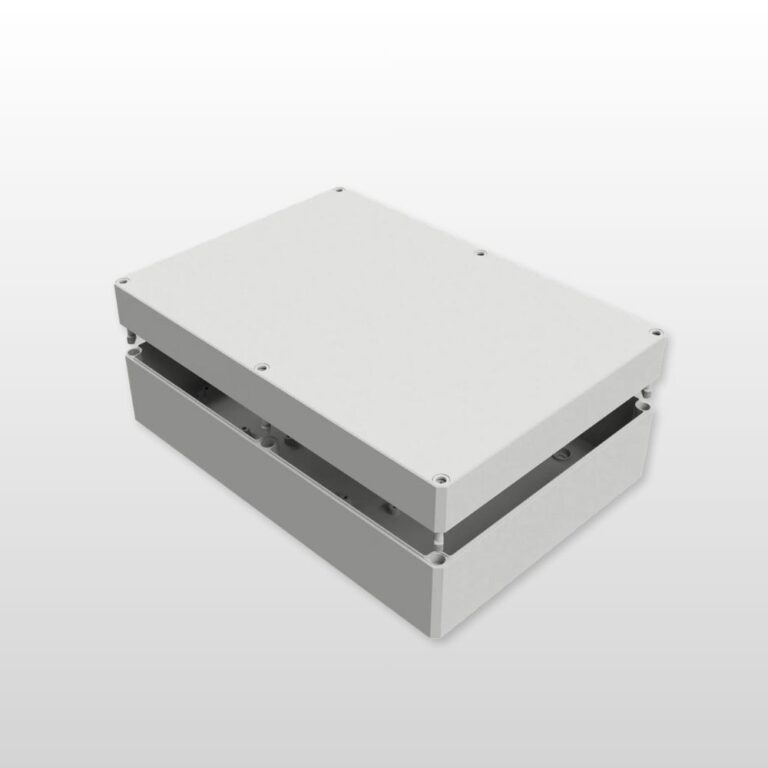
Plastic is a good option for lower cost requirements and electrical insulation, but is best suited for lighter applications.
Technical characteristics
- IP class: IP65-IP69K
- Limitations: limited durability in demanding environments
Typical applications:
- Real estate & telecom
Industry case
- Telekom and indoor installations
Comparison table
The choice of material for your enclosure affects both lifespan, protection and cost. The table below provides an overview of the most common materials, their IP rating, key benefits and limitations – as well as typical industries where they are used.
| Material | IP class | Advantages | Limitations | Typical industries |
|---|---|---|---|---|
| Steel Plate | IP55–IP65 | Robust and cost-effective | Risk of corrosion | Industry, building |
| Stainless Steel | IP65–IP69K | Hygienic and corrosion-resistant | Higher cost | Food, pharmaceutical, offshore |
| Aluminium | IP65 | Low weight and good EMC shielding | Lower mechanical strength | Offshore, energy |
| Plastic | IP65–IP69K | Lightweight, insulating, and affordable | Limited durability | Building, telecom |
FAQ - Frequently Asked Questions about Materials and IP Rating
Which material and IP rating are needed in the food industry?
Stainless steel (AISI 316) with at least IP66/IP69K.
Are plastic boxes approved for outdoor use?
Only in mild environments, otherwise steel plate or stainless steel is required.